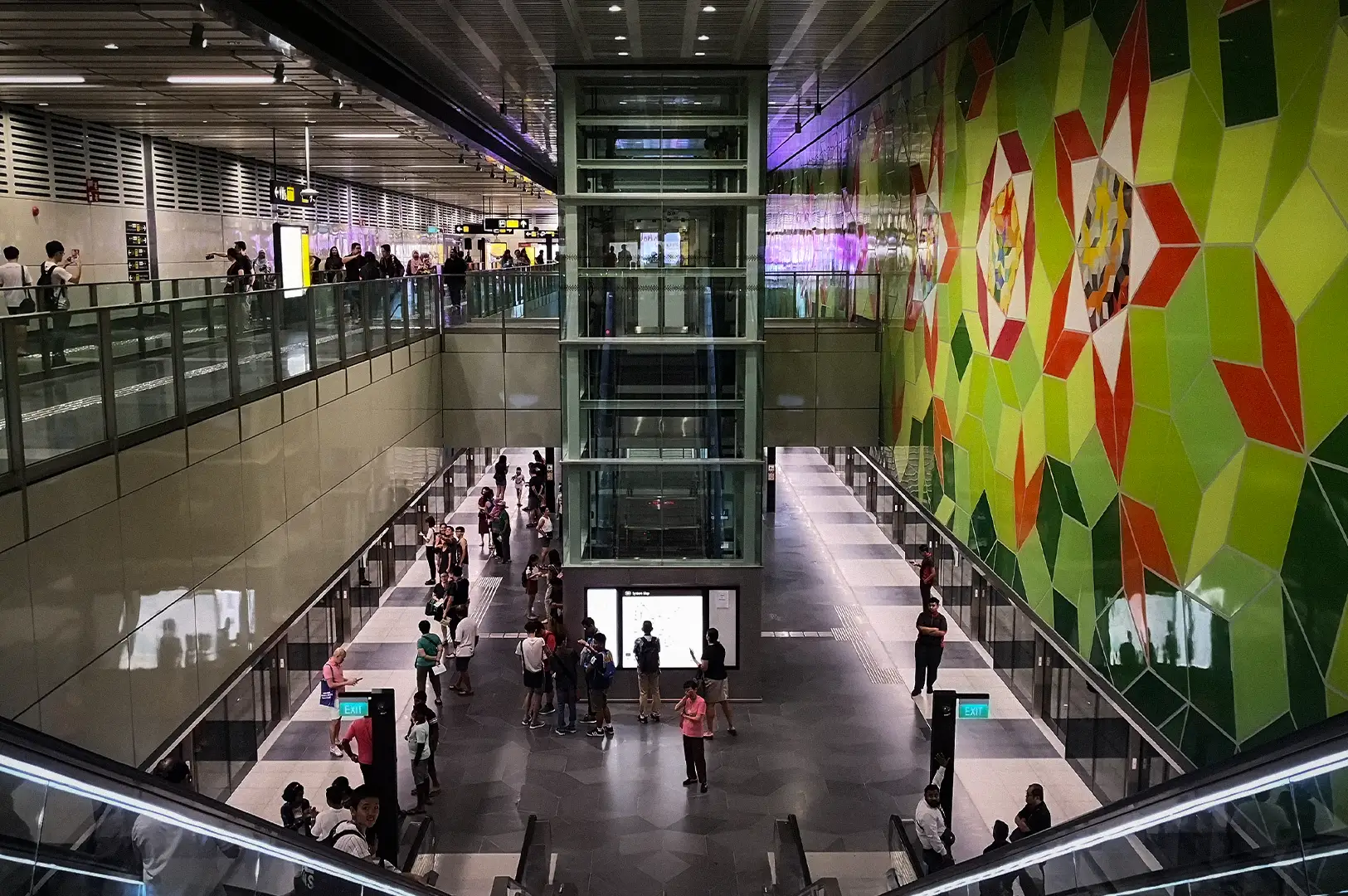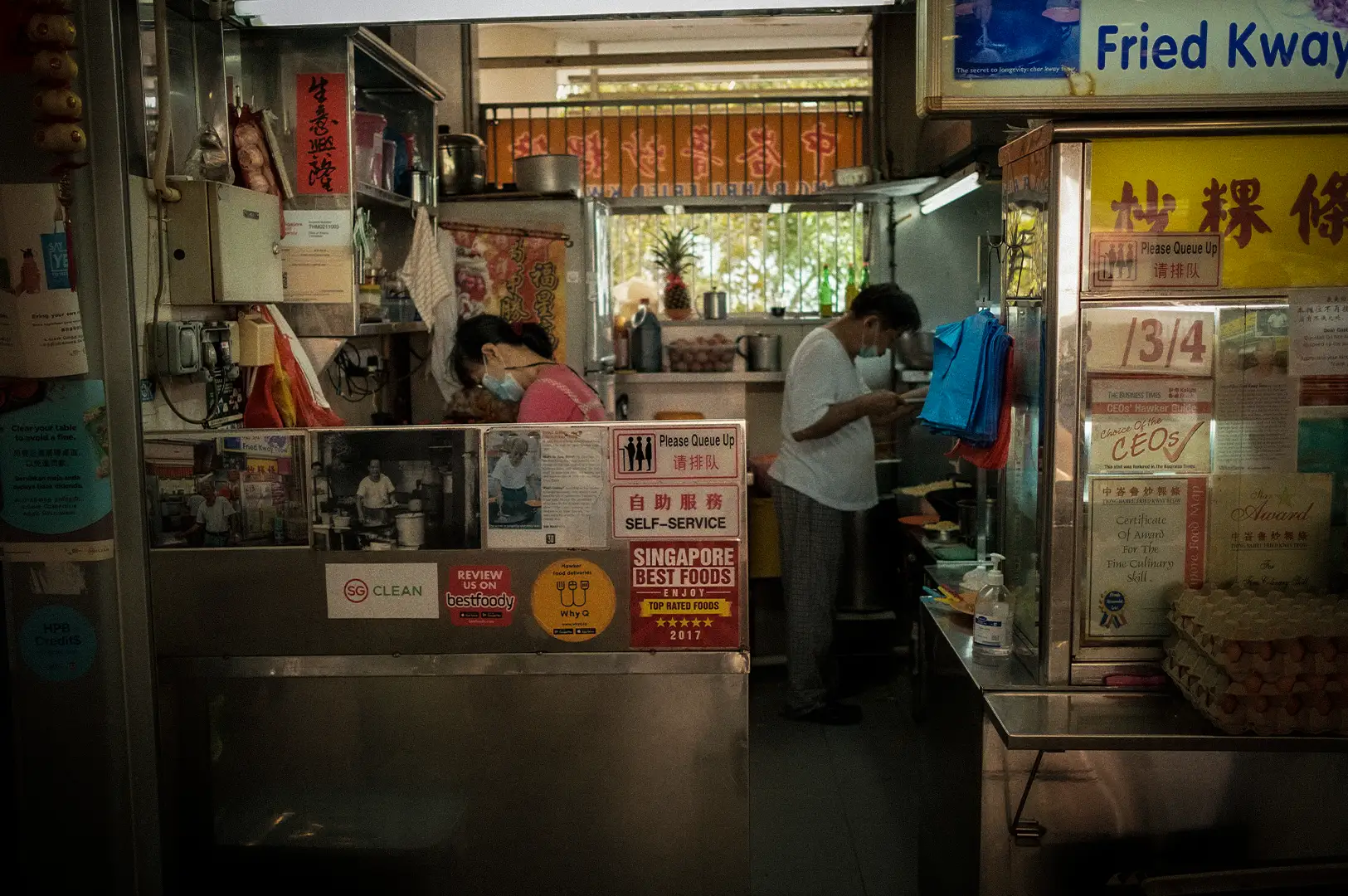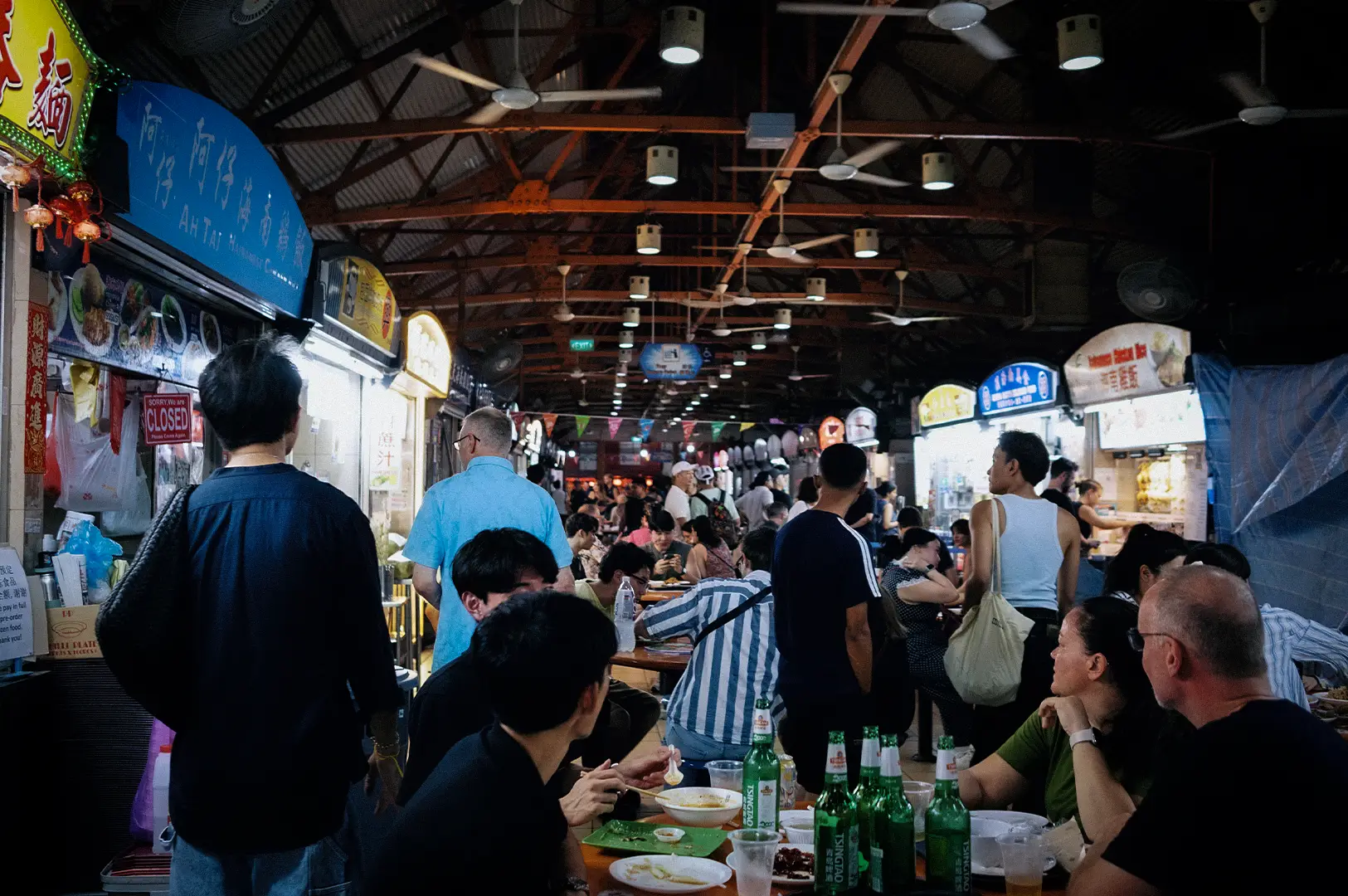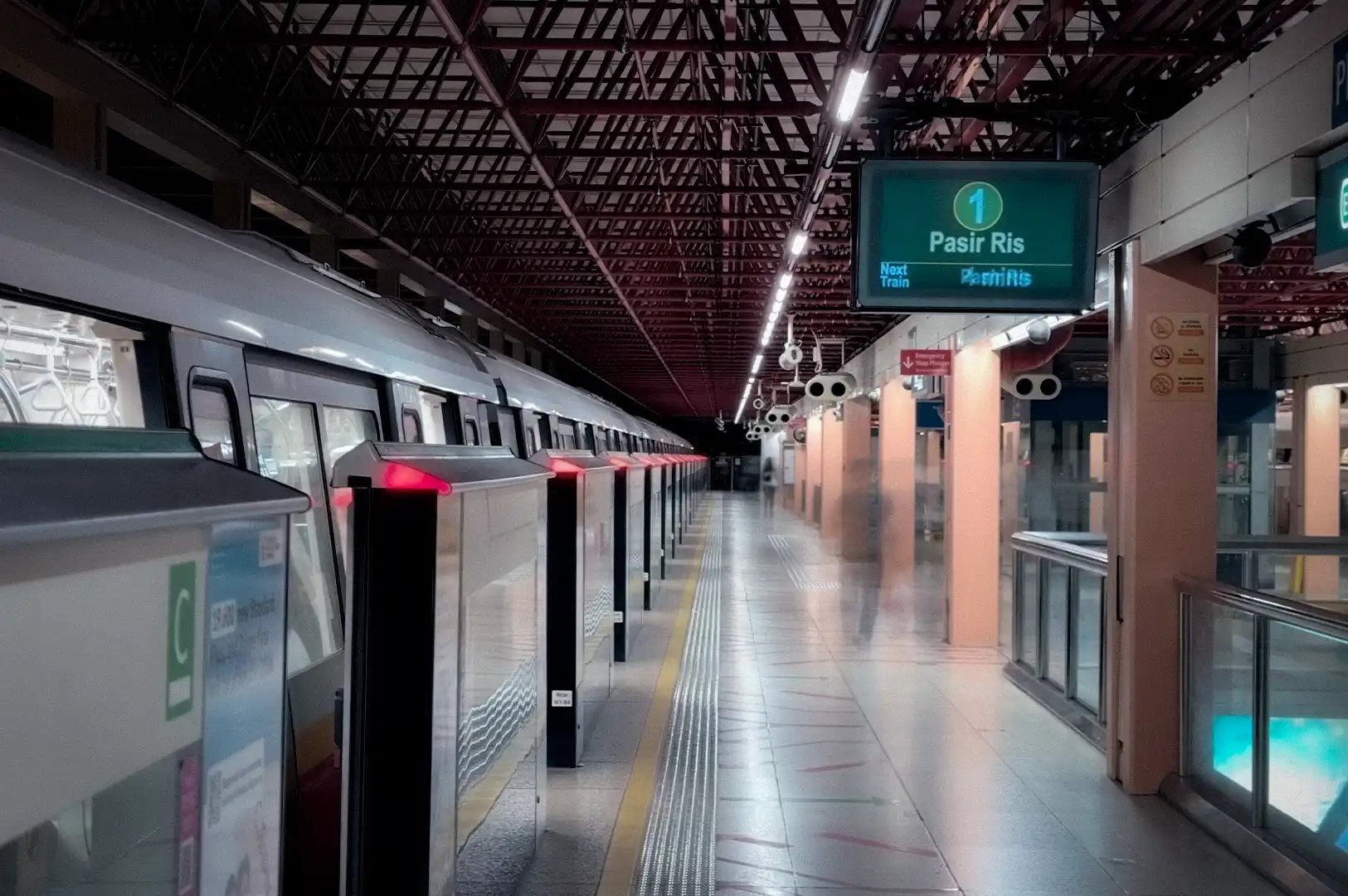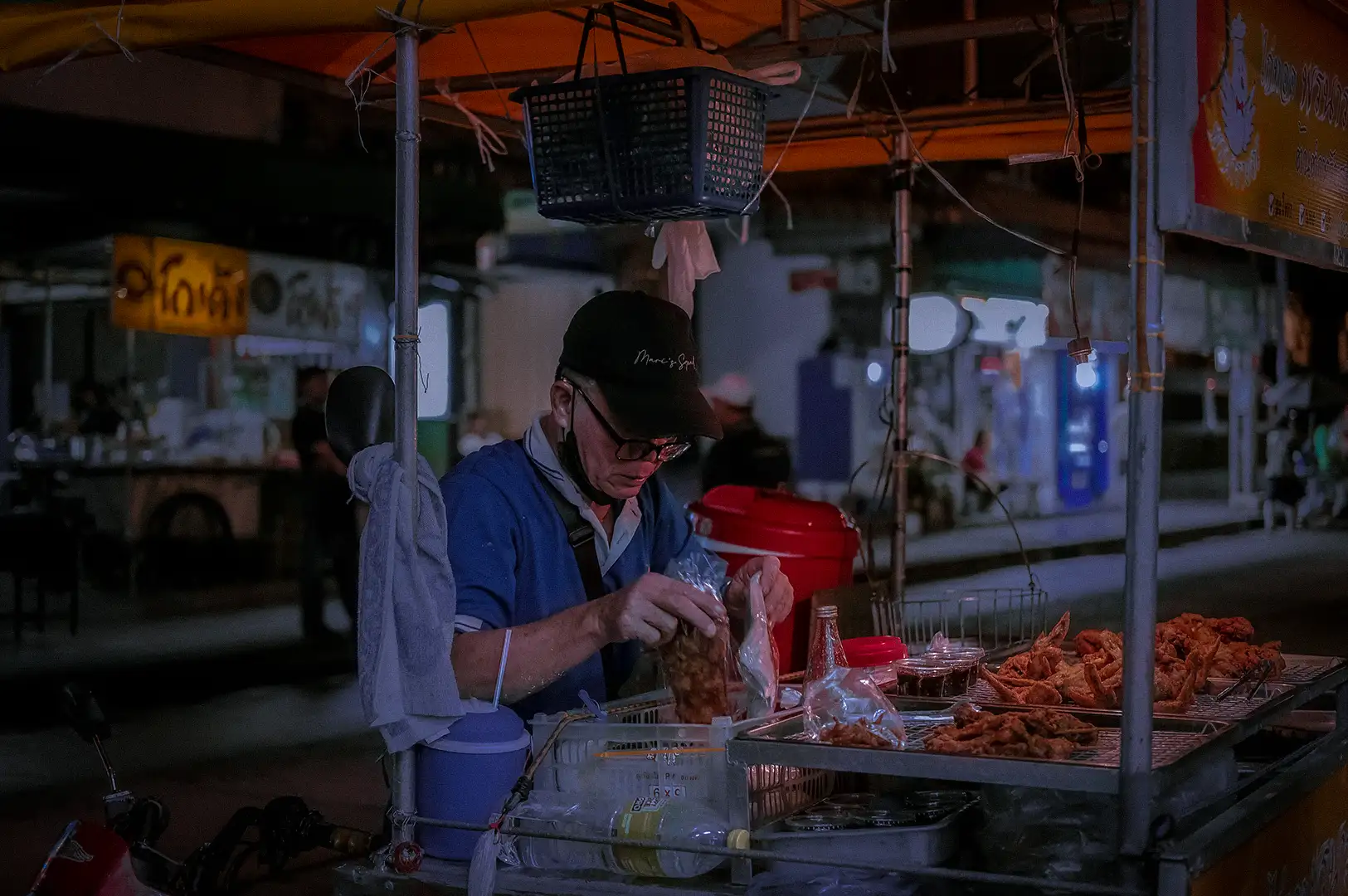
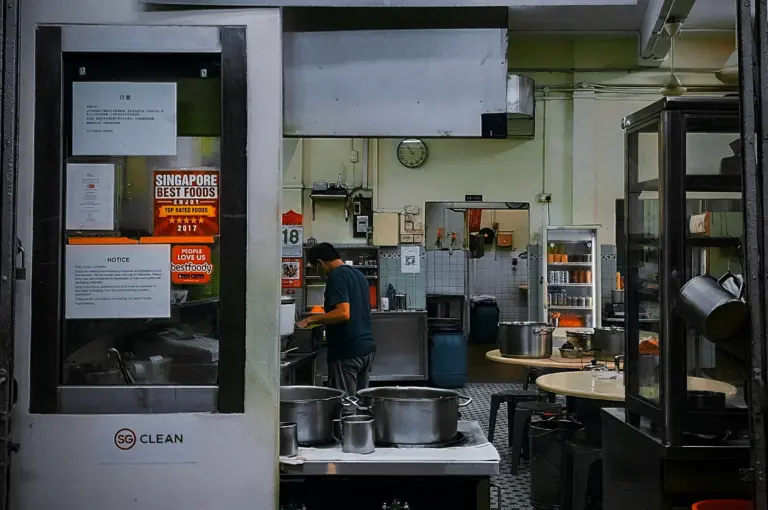
Lunch and dinner crowds near MRT stations move differently.
At lunchtime, movement feels compressed. Office workers leave buildings in waves, queues form quickly, and food decisions happen within minutes. The pace is immediate because time is limited.
Dinner crowds are less uniform.
People arrive at different times, often after separate journeys home. Some stop to eat immediately after leaving the station, while others walk around first before deciding.
The atmosphere changes with this difference.
Lunch near busy MRT stations feels transactional. Tables turn over rapidly, queues move with urgency, and meals are often finished within a fixed break period.
Dinner feels more flexible.
Even at crowded stations, there is slightly more willingness to wait, sit longer, or consider different options. Groups gather more frequently, and takeaway orders become more common alongside dine-in meals.
The stations themselves also change.
Business districts quiet down after lunch hours, while residential stations become more active toward the evening. The MRT network shifts the centre of food activity across the day.
Watching both periods closely reveals that the same station can support two very different dining rhythms.
One built around speed.
The other around transition between work and home.